
Fluent Products and Core Capabilities
Essential knowledge
Intended Audience:
Business User
Author:
Catherine An
Changed on:
11 May 2026
Overview
This article provides a comprehensive exploration of Fluent Commerce's platform, detailing its critical components and functionalities that enable seamless order management and omnichannel fulfillment. It highlights how features like automated order orchestration, global inventory visibility, and integration tools drive operational efficiency and enhance customer experiences.Key points
- Explains how automated order orchestration utilizes APIs and webhooks to map optimal fulfillment paths
- Understand how real time global inventory visibility prevents stockouts and significantly reduces order cancellations
- Explore essential omnichannel capabilities including Ship from Store and Click & Collect (BOPIS)
This module moves beyond high level product definitions to explore the specific functional engine of the platform. It breaks down the 9 Critical Components of the Fluent ecosystem into two core categories:The 7 Operational Pillars which manage the physical and digital lifecycle of an order are: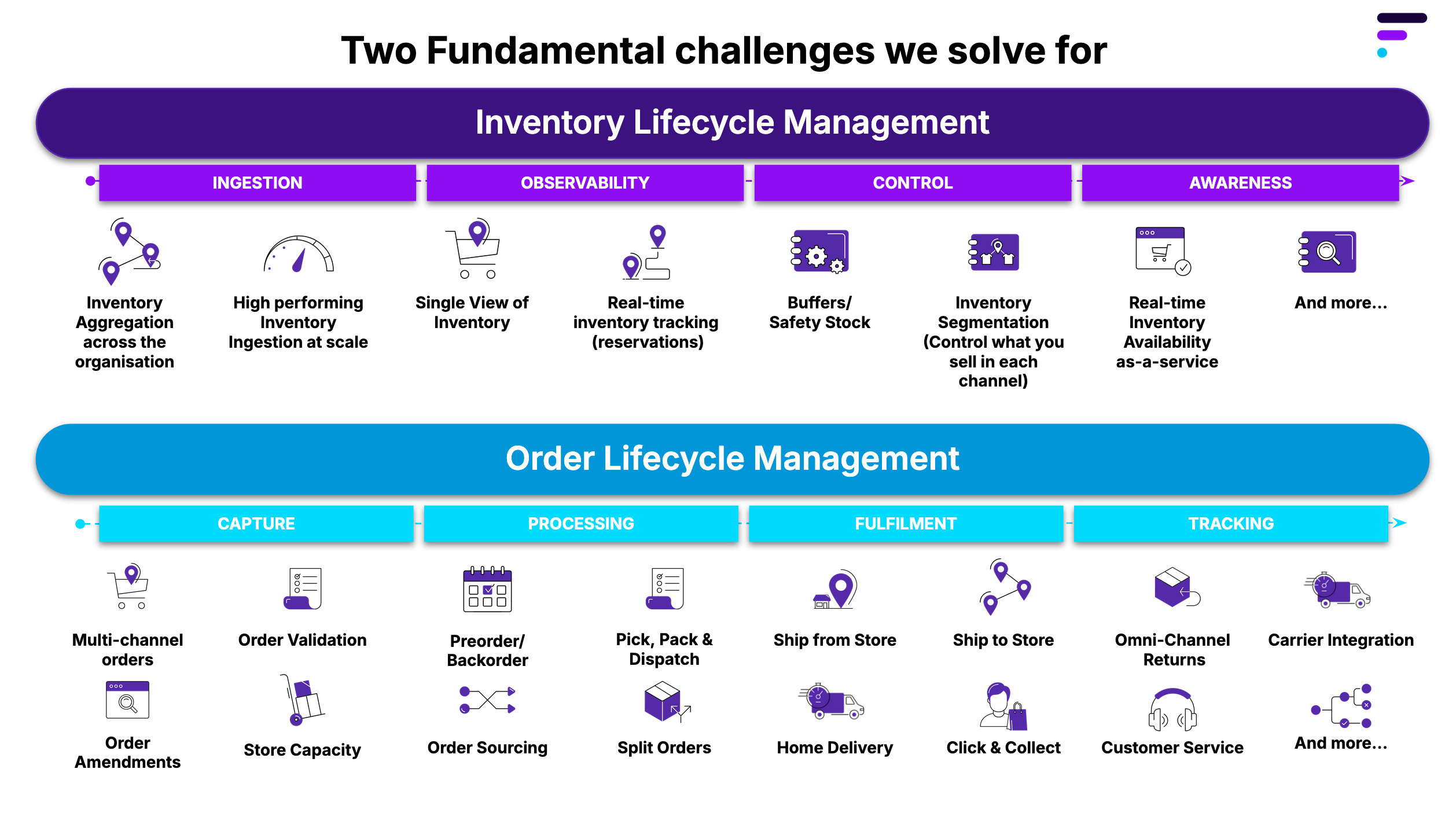
 If conditions change, including inventory availability or routing constraints, the orchestration engine recalculates decisions during the lifecycle. This allows fulfillment to continue without restarting the process. This dynamic architecture drives 3 core capabilities: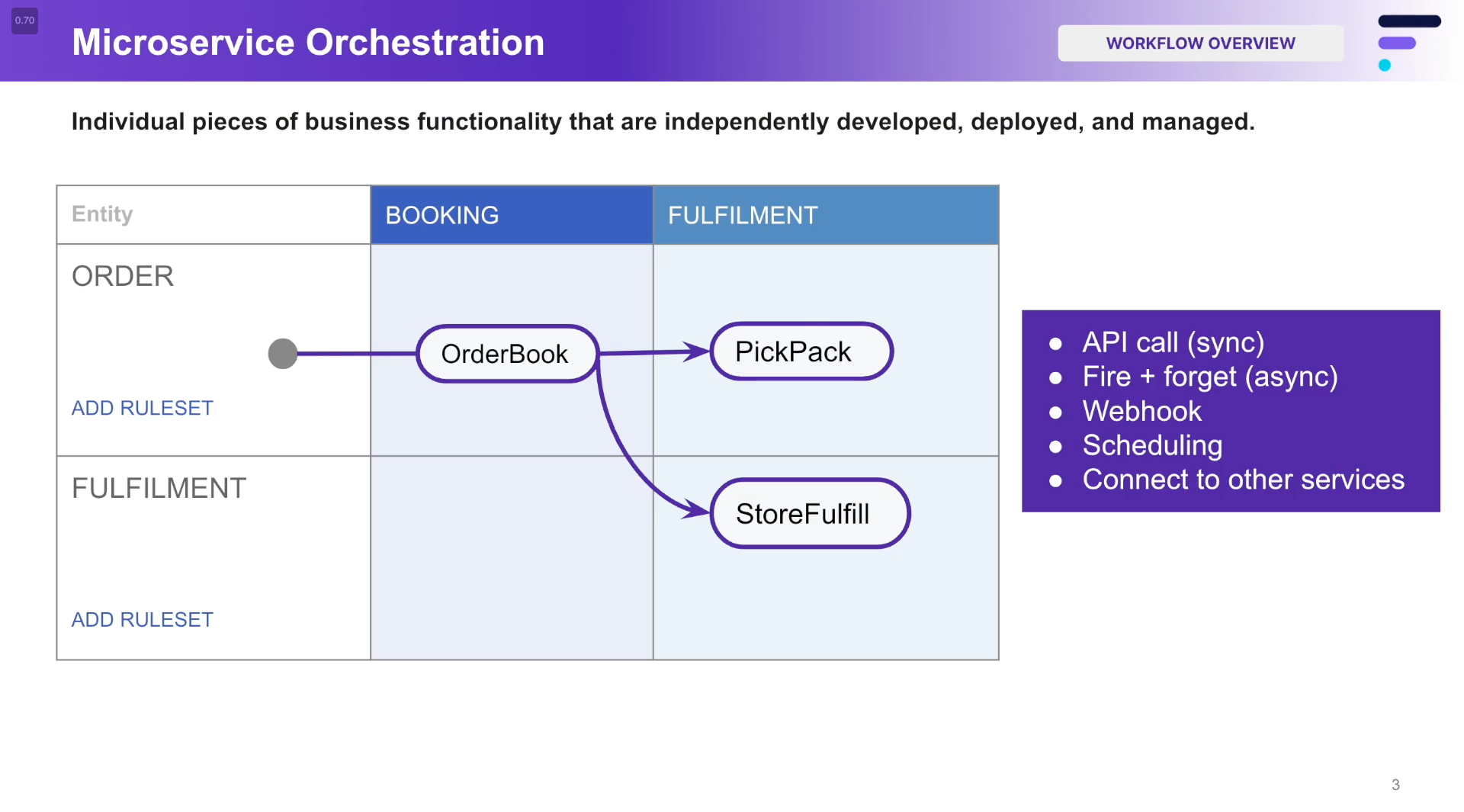
 Fluent Commerce supports multiple catalogues aligned to different sales channels. Control groups allow inventory buffers and location exclusions to be applied where needed. This approach balances sales exposure with availability protection.Inventory, locations, and customer orders are linked to create a reliable source of truth for availability across channels. This capability is commonly described as the availability layer that prevents overselling and unlocks trapped stock.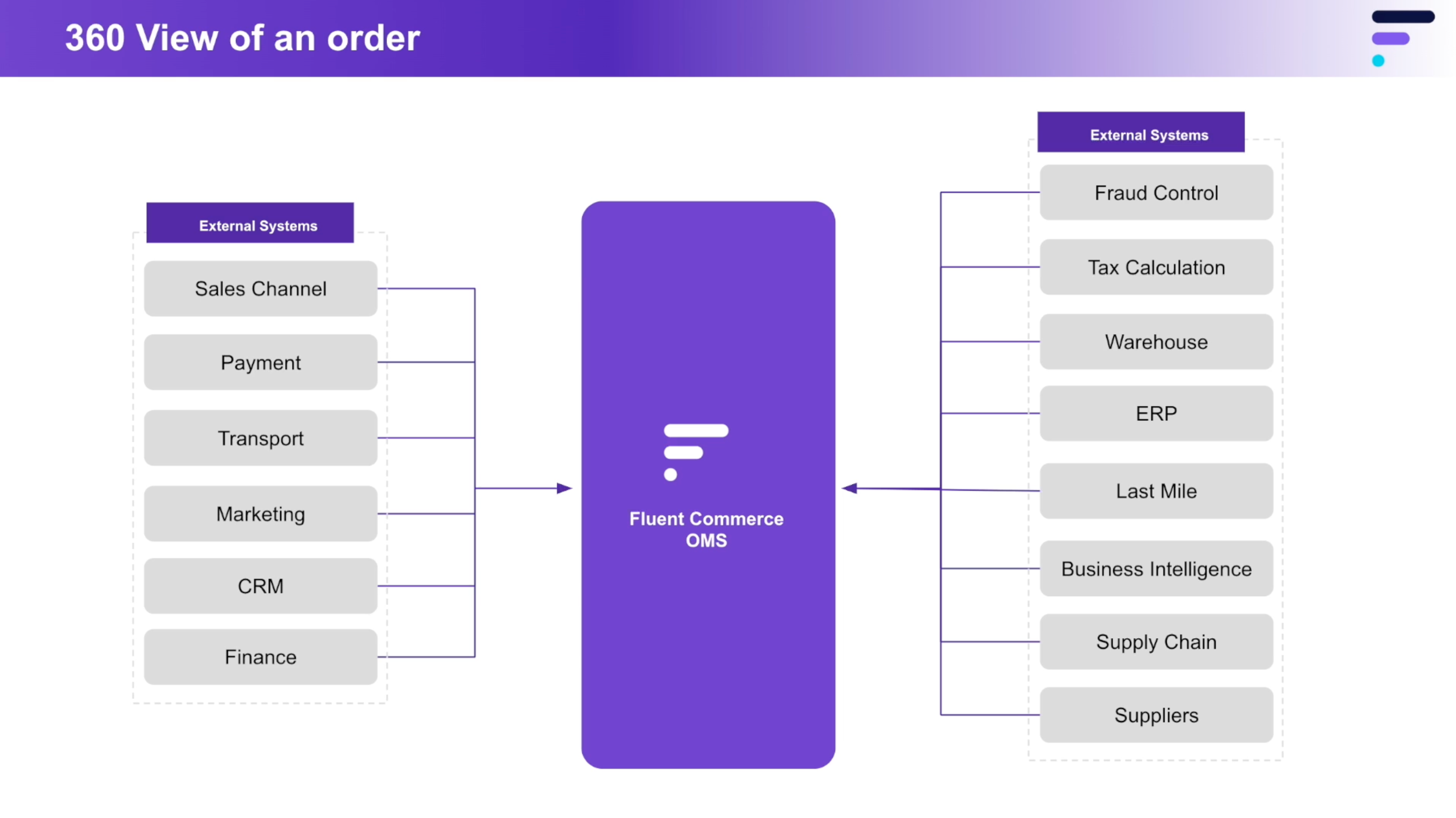
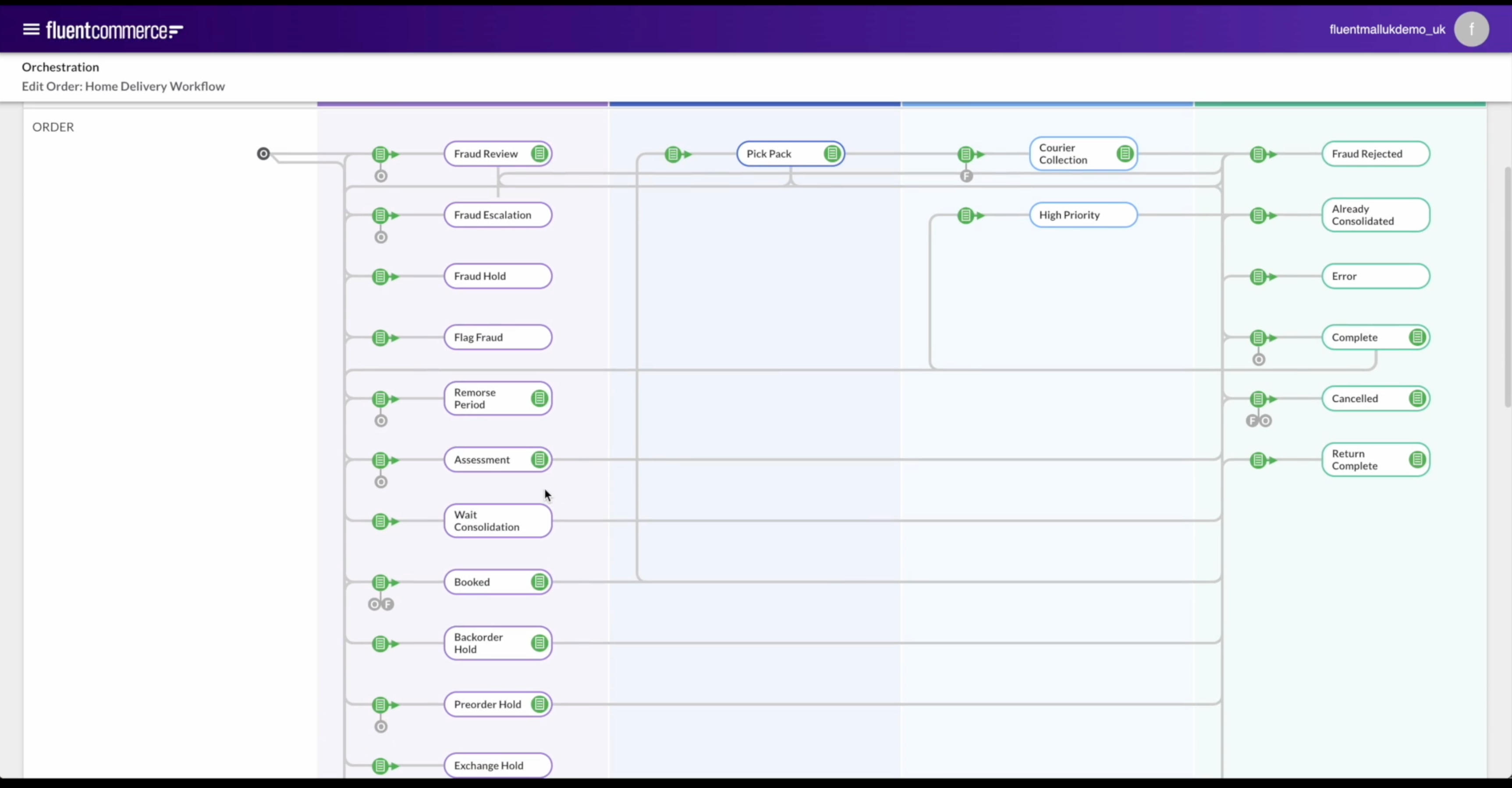
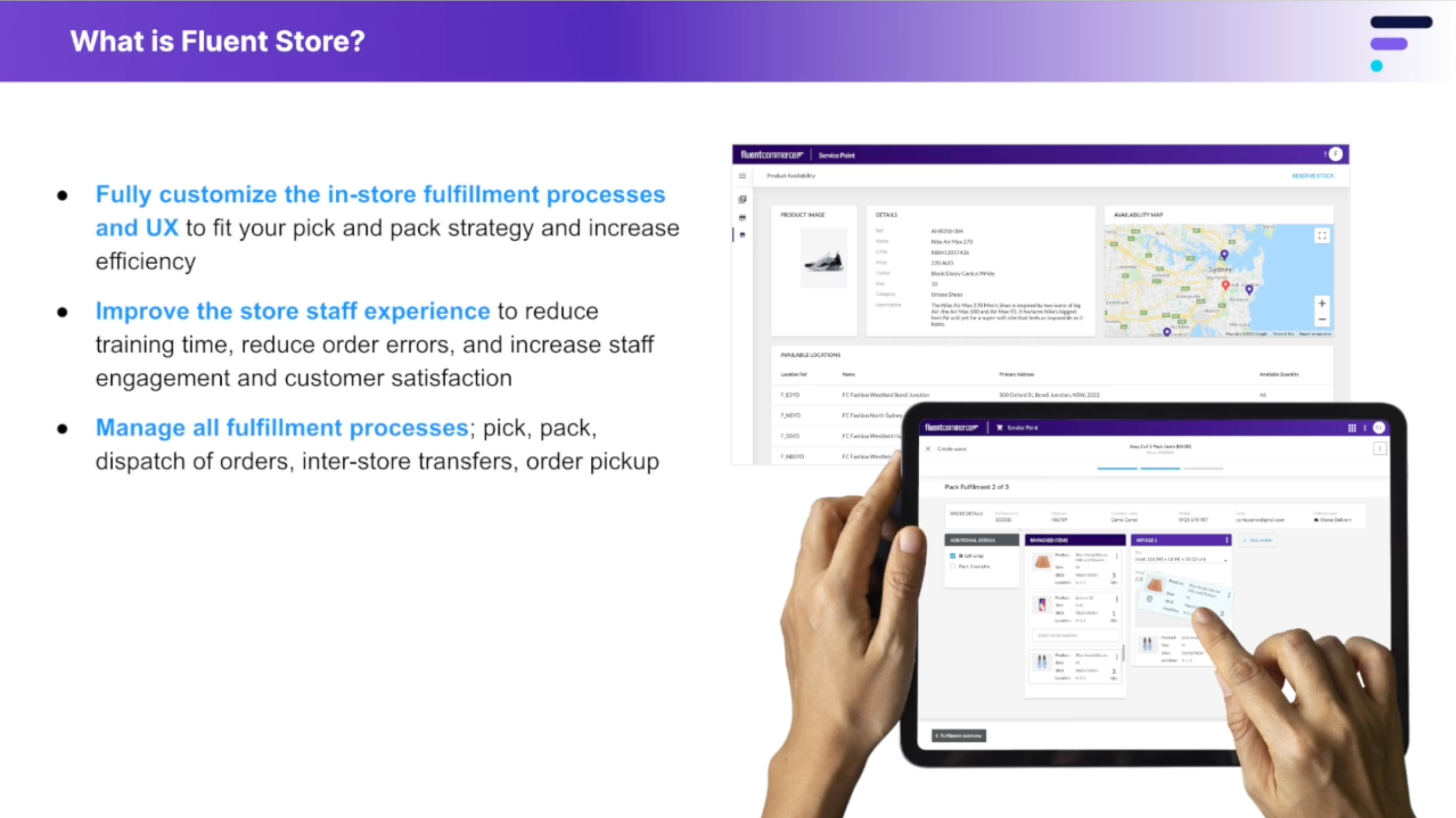
 Orders are created via API and include a customer selected store. Store staff use the Fluent Store application to manage pick waves, locate items, pack orders, and move them to a holding area.Once packing is complete, customers are notified that the order is ready for collection. A verification step is completed at pickup before the order status updates to indicate completion.This capability is often positioned as the in store execution layer for omnichannel fulfillment.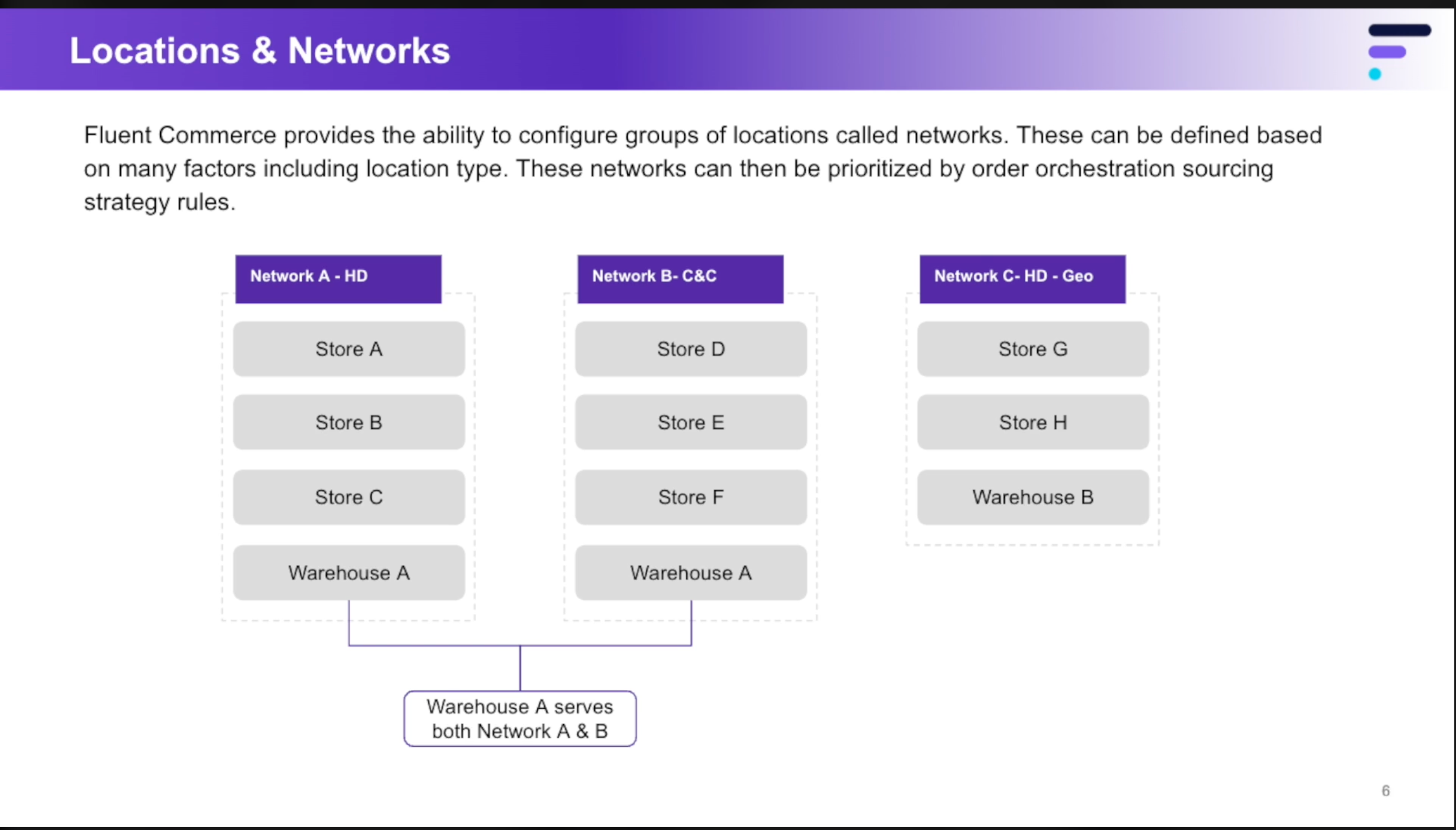
 Fluent Connect replaces rigid, custom code with adaptive connectivity through the following core features: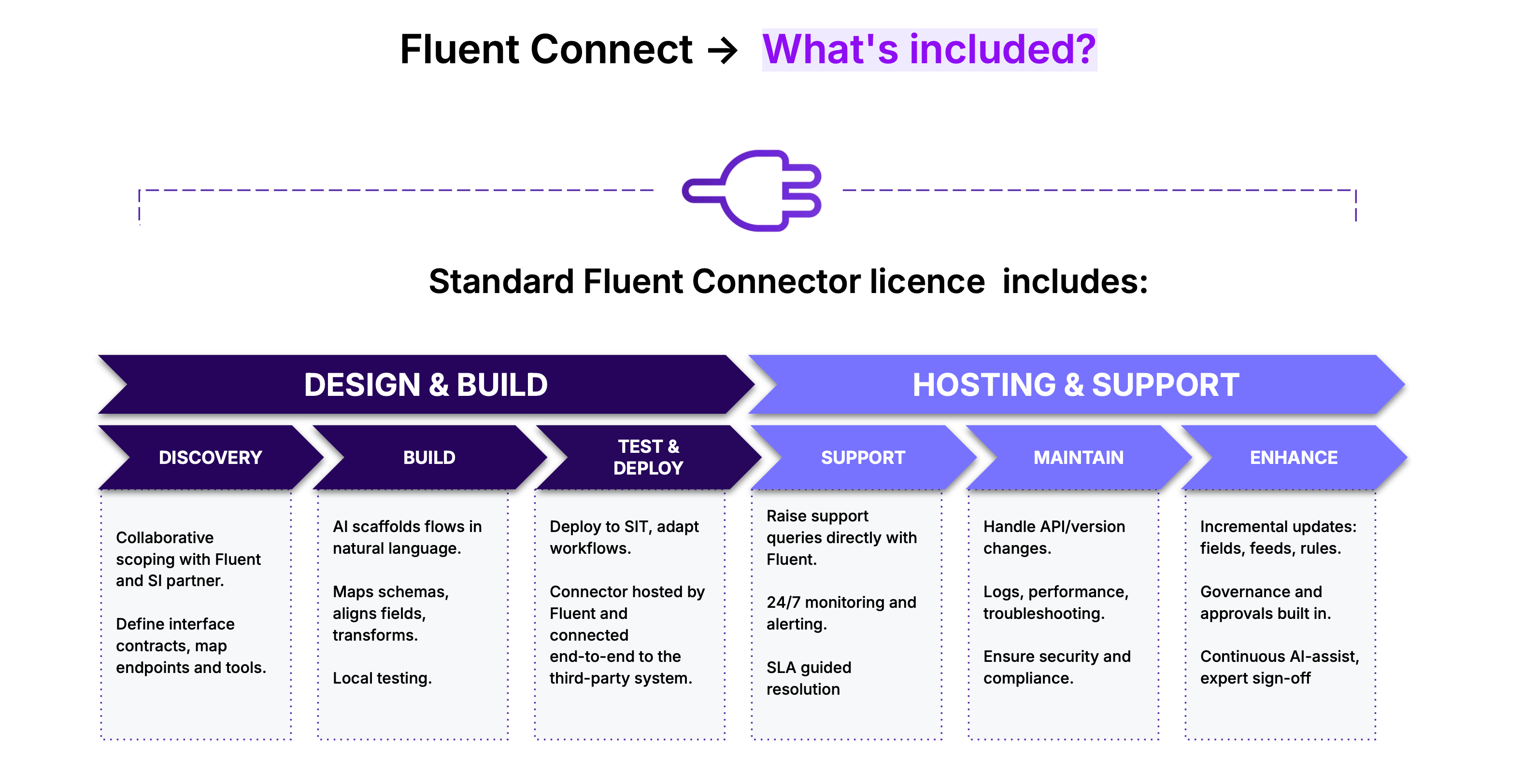
 Metrics available to be displayed with Fluent Analytics
  How the metrics are displayed
- Order Orchestration
- Global Inventory
- Managing Orders
- Management of Order Status
- Ship from Store
- Click & Collect
- Location Management
- Fluent Connect: Powers seamless connectivity and integration with external systems.
- Fluent Analytics: Powers real-time data visibility and operational decision making.
Order Orchestration
Order Orchestration acts as the central decision layer of the platform, intelligently coordinating customer orders, live inventory, and fulfillment locations to automate how an order moves to completion. For the business, this automated routing translates directly into massive operational savings and performance improvements, such as a proven 50% reduction in shipping costs and a 50% faster time to delivery. By replacing manual routing with intelligent rules, organizations can flawlessly scale their order volumes, eliminate expensive fulfillment inefficiencies and guarantee a highly reliable customer experience.Fluent Commerce uses API calls to execute orchestration logic. Webhooks connect systems and allow the platform to respond in real time to events such as order creation and fulfillment updates.When an order is placed, the orchestration engine captures order details and evaluates available inventory. Sourcing logic determines the most suitable fulfillment location, such as a warehouse or store. As the order progresses, the engine coordinates handoffs with courier services and updates order state as events occur.If conditions change, including inventory availability or routing constraints, the orchestration engine recalculates decisions during the lifecycle. This allows fulfillment to continue without restarting the process. This dynamic architecture drives 3 core capabilities:- Precision Scheduling: Developers can fine tune workflows using precise scheduling to enable timed executions for workflow optimization.
- Intelligent Routing: When an order is captured, the engine maps the optimal fulfillment path. It engages with inventory management to assess stock levels and selects the most suitable distribution center based on specific sourcing logic.
- Adaptability: A key strength is the ability to respond adhoc changes. If a route is blocked or stock changes, the engine adjusts the fulfillment decision instantly to maintain the customer experience.
Global Inventory
Global Inventory provides a consolidated view of stock availability across the supply chain. It addresses issues caused by siloed inventory and limited visibility.Inventory visibility improvements have resulted in a £50 million revenue increase from saved sales for a Tier 1 retailer. Accurate inventory protection has also reduced cancelled orders by 50% for another Tier 1 retailer. Optimized stock allocation and shipping decisions have generated £8 million in transport savings.Fluent Commerce supports multiple catalogues aligned to different sales channels. Control groups allow inventory buffers and location exclusions to be applied where needed. This approach balances sales exposure with availability protection.Inventory, locations, and customer orders are linked to create a reliable source of truth for availability across channels. This capability is commonly described as the availability layer that prevents overselling and unlocks trapped stock.Managing Orders
Managing Orders provides visibility into the end to end order lifecycle and centralizes operational data. Retailers often face challenges related to fragmented systems, limited observability, and difficulty tracking order progress. Fluent Commerce’s OMS addresses these issues by acting as a central hub for order information.The OMS aggregates data from payment systems, transport providers, ERP platforms, and last mile carriers. This creates a single environment for monitoring fulfillment from dispatch to delivery.The order detail screen presents a consolidated view of each order, including identifiers, status, customer information, items, and payment details. This view supports operational tracking, issue resolution, and accountability. This capability is typically positioned as the operational control center for orders.Management of Order Status
Order Status Management is the workflow and decision framework that models the order lifecycle, applies logic, and tracks progress. It relies on fully configurable statuses (such as processing, fraud review, booked or return created) that can be mapped to align perfectly with your unique business processes.Status transitions are driven by a combination of automated rules, and user actions. For example, an automated rule might push an order into a fraud status, pausing the workflow so a user can conduct a manual review. All status updates are reflected on the order detail page to provide complete observability.While the system automates these transitions, it also empowers Customer Service Representatives (CSRs) to intervene. CSRs do not just push orders into new statuses, they execute specific actions to solve customer and operational issues. Depending on the order's stage, CSRs can:- Execute order amendments: Change a delivery address, add/remove items or switch an order from pickup to shipment.
- Resolve fulfillment issues: Manage internal escalations for missed delivery dates.
- Manage financials & returns: Apply customer appeasements, refund shipping costs, or trigger returns and uneven exchanges.
Ship from store
Ship from Store enables retail locations to fulfill online orders in addition to traditional warehouses, effectively turning every store into an active fulfillment node.By making local store inventory available online, businesses drastically reduce digital out of stock situations, allowing them to sell more inventory at full price rather than relying on end of season markdowns. By routing orders to the optimal store based on proximity and capacity, retailers can optimize logistics by reducing delivery costs and shortening delivery times.Orders are allocated to a store or warehouse depending on real time availability and your unique network configuration. To execute these orders, staff use Fluent Store to acknowledge orders, pick items, pack parcels, and prepare them for courier collection. Once collected, delivery updates are instantly reflected in the back office, and automated customer tracking notifications are triggered.Click and Collect/BOPIS
Click & Collect supports in store pickup of online orders and drives omnichannel engagement.Retailers using this capability have seen a 26% increase in BOPIS orders, a 50% reduction in cancellations and a 33% increase in upsells.Orders are created via API and include a customer selected store. Store staff use the Fluent Store application to manage pick waves, locate items, pack orders, and move them to a holding area.Once packing is complete, customers are notified that the order is ready for collection. A verification step is completed at pickup before the order status updates to indicate completion.This capability is often positioned as the in store execution layer for omnichannel fulfillment.Location and Network Management
Delivering a profitable omnichannel experience requires managing a highly diverse network of efficient order handling locations. By logically grouping locations into networks and applying unique operational attributes, businesses can dynamically route orders to the most effective locations. This flexibility prevents network bottlenecks, and ensures retailers can easily navigate complex workflows like pre orders, stock transfers and, managing inventory buffers.Location & Network Management acts as the configuration layer that controls which locations are eligible to fulfill orders and how they are prioritized. Locations are grouped into networks based on their fulfillment purpose and the platform provides complete visibility into all configured locations and networks.Location records include address details, network membership, and custom attributes. Specific attributes such as a location's daily maximum order capacity, operating schedules, rejection rates, and location type directly influence and optimize fulfillment decisions.Locations can be activated, deactivated, or updated through a guided interface. If a location goes offline or requires a closure date, the system can be dynamically updated to ensure affected locations are instantly excluded from active sourcing logic.Fluent Connect (The Integration Layer)
Speed to market is often hindered by complex integrations with legacy systems, which traditionally consume 50% of an Order Management System implementation’s effort and budget. Fluent Connect addresses this challenge. By shifting the integration burden to Fluent's fully managed platform, businesses drastically reduce delivery cycles from months to days and significantly lower their Total Cost of Ownership (TCO). This allows a retailer's internal IT team and System Integrators to focus on high value, revenue generating customer experience tasks.Fluent Connect replaces rigid, custom code with adaptive connectivity through the following core features:- AI built connectors: Fluent's internal experts use a Connector AI Studio to build custom connectors for backend systems (such as SAP and ERPs) in days rather than months. Because this is a fully managed service, Fluent Commerce handles all of the hosting, maintenance and ongoing 24/7 support.
- Continuous Adaptation: The AI engine continuously monitors and adapts the connectors as third party APIs change, ensuring the integrations remain flexible and never break as a client's ecosystem evolves.
- Connected Inventory: The platform utilizes specialized data feeds to stream inventory data in near real time to external systems. This effectively eliminates the data caching issues that lead to overselling, ensuring that the entire commerce ecosystem operates with an accurate view of stock to reduce canceled orders.
Fluent Analytics
Retailers often struggle to extract actionable value from their order management data. Fluent Analytics solves this by transforming raw data into a native decisioning hub. It provides a dynamic, real time view across all order, inventory, and fulfillment operations. This complete visibility empowers operational teams to move from reactive troubleshooting to proactive optimization. Users can instantly detect outliers, such as delayed fulfillment times or sudden spikes in order cancellations and rejections. By quickly fixing these friction points, businesses can achieve massive financial returns. In one proven example, a company reduced its cancellation and rejection rates to retain over $5.8 million in revenue in a single month. Fluent Analytics' core features include:- Tailored & Embedded Dashboards: Users can create custom visualizations for specific teams or embed single, real time metric tiles onto any page within the Fluent Order Management interface. This ensures operational and business KPIs are always visible directly within the user's daily workflow.
- Fluent Analytics Studio: A dedicated workspace designed for deeper data exploration. Teams can drill down into critical metrics, export data, schedule automated reports, and edit custom visualizations.
- Conversational Analytics (Upcoming): As the platform evolves, Fluent Analytics incorporates GenAI capabilities, allowing users to simply ‘chat with their data’ to query, analyze, and build new visualizations using plain natural language.
Metrics available to be displayed with Fluent Analytics How the metrics are displayed