Fluent Commerce Logo
Docs

What is an OMS and why does it matter?

Essential knowledge

Intended Audience:

Business User

Author:

Catherine An

Changed on:

30 Mar 2026

Overview

A modern Order Management System (OMS) is a centralized platform that manages orders from creation to fulfillment, ensuring real-time inventory accuracy and seamless omnichannel integration. It drives business value by optimizing operational efficiency, reducing costs, and enabling scalable growth through intelligent automation and flexible fulfillment options.

Key points

  • Definition of an OMS as a platform that manages order from creation to fulfillment
  • The failure of legacy OMS systems
  • Core operational benefits of an OMS: speed, accuracy, consistency, and flexibility
  • How an OMS drives business value by accelerating profitable growth and reducing operational complexity

What is an OMS and why does it matter? 

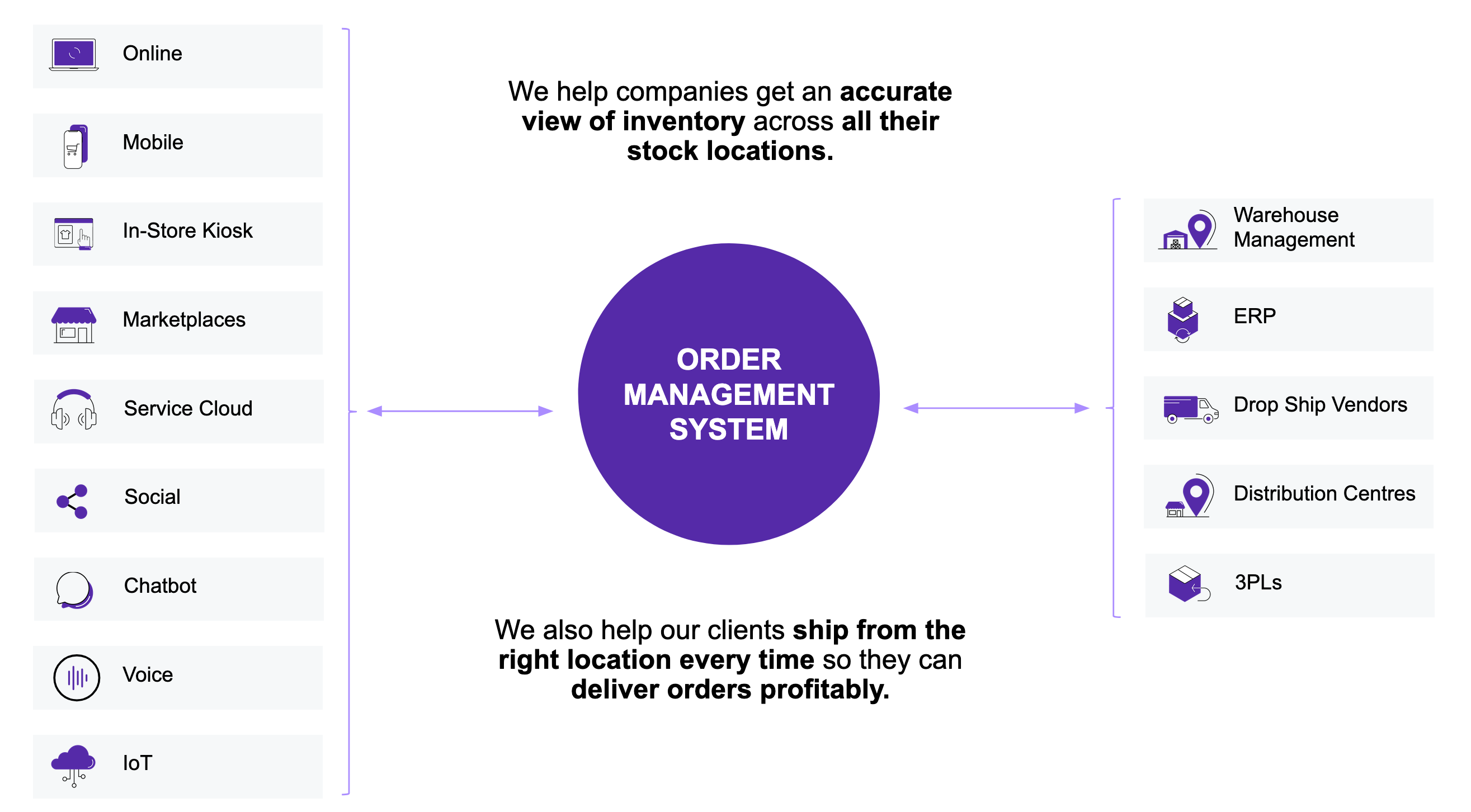
An Order Management System (OMS) is a software platform that orchestrates complex fulfillment networks from the initial click to final delivery. It tracks each order from the moment it is placed, through payment processing, inventory allocation, shipping and, delivery.An OMS serves as a central system that connects the tools involved in the order process such as sales channels, inventory systems, and warehouses. By coordinating these systems, the OMS ensures that orders are accurate, inventory levels are up to date and fulfillment decisions are based on real time data rather than manual updates or assumptions.

What does an OMS do specifically? 

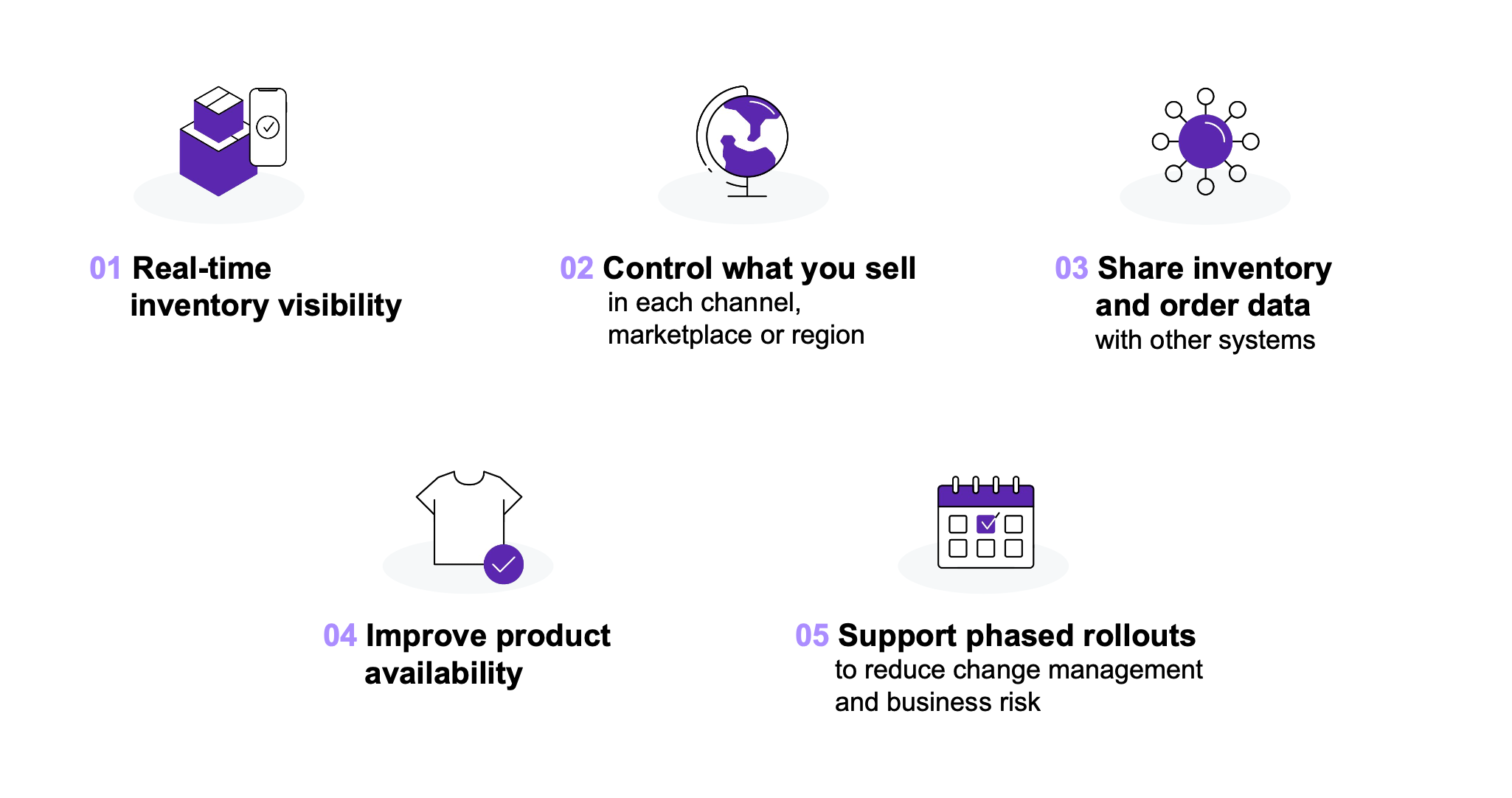
An OMS captures orders from multiple channels such as e commerce sites and third party marketplaces, validates order details and confirms product availability. It manages inventory by reserving stock as orders are placed and updating quantities as items are shipped or returned. The system determines where an order should be fulfilled based on factors like inventory availability, location, and delivery requirements. It also tracks shipment status and provides visibility into where each order is in the process.
The role of Order Management Systems
No alt provided
Additionally, an OMS supports returns and exchanges by linking them back to the original order and inventory records. This allows businesses to restock items correctly, issue refunds or replacements accurately. Reporting and analytics within the OMS help identify issues such as fulfillment delays or high return rates, enabling businesses to improve operations and reduce errors over time.
No alt provided

The failure of Legacy Order Management Systems

Relying on legacy monolithic systems or basic ERP modules creates significant financial and operational risks. These older systems are rigid and can frequently fail during peak traffic or global expansion. They lack real time visibility into inventory across complex networks and struggle to support modern omnichannel requirements. These limitations create two critical sales risks:
  • Overselling: This system accepts orders for out of stock items that forces the retailer to cancel orders, driving up contact center costs and damaging customer loyalty. Industry benchmarks show that order errors caused by system latency and rigid routing can cost businesses $2M to $6M annually (roughly 1 2% of gross merchandise value).
  • Underselling: Inventory trapped in silos remain invisible to digital channels, resulting in lost revenue as the system reports it as out of stock.
While legacy platforms can be adapted to meet most complex business requirements, the real problem is the massive effort required to make those changes. Because these are often monolithic architectures relying on hard coded, point to point integrations, modifying a workflow requires extensive developer resources. Simple business adjustments such as adding a new carrier become big projects taking months to code and test, rather than minutes to configure. This high barrier to change frustrates business teams and drives organizations to seek modern, composable platforms that offer high functionality with a significantly lower Total Cost of Ownership (TCO). 

Why Businesses Implement an OMS

Organizations typically implement a modern OMS when existing systems no longer support business requirements. Common triggers include:
  • Legacy OMS or outdated systems that cannot support omnichannel fulfillment or real time inventory visibility.
  • Homegrown or custom systems that lack scalability, real time visibility or multi channel integration.
  • Limitations in ERP or current OMS that cannot handle multi location inventory or complex fulfillment.
  • Limited visibility into orders and inventory, making it difficult to prevent stockouts, cancellations and fulfillment failures.
  • Aggressive growth plans where the business is expanding into new sales channels (such as digital marketplaces and social commerce), launching in new global regions or bringing online new fulfillment nodes and physical retail stores.
    • As the businesses attempt to scale, legacy platforms and ERPs can struggle to handle the added volume and complexity without incurring massive spikes in maintenance costs.

Examples of operational use cases

Beyond architectural limitations, businesses implement an OMS to solve specific, everyday friction for their supply chain and fulfillment teams. A modern OMS removes manual workarounds and automates complex omnichannel journeys such as:
  • Intelligent Sourcing & Minimizing Split Shipments: Instead of relying on manual order processing, the system automatically calculates the most profitable location to fulfill an order from. For example, it can prioritize a store closest to the customer to save on shipping or route orders to ensure all items come from the same location to drastically reduce costly split shipments.
  • Omnichannel Execution (BOPIS & Ship from Store): Turning physical retail stores into active distribution centers. This allows retailers to offer highly demanded, flexible services like rapid 30 minute Click & Collect, curbside pickup and same day delivery.
  • Managing Pre orders and Backorders: Allowing the business to safely sell future inventory or out of stock items that are scheduled to arrive, capturing revenue early without creating manual tracking nightmares for operations teams.

Why does an OMS matter for business value? 

A modern OMS can deliver measurable business value by improving fulfillment performance, accelerating profitable growth, and lowering operational complexity.

Accelerating Profitable Growth

There are three key considerations for an OMS to accelerate profitable growth:Reliable fulfillment: Ensures the right product reaches the right customer on time, increasing brand loyalty and customer retention.Channel integration: Consolidates all sales channels, allowing smooth transitions for customers.Agility and Speed: An OMS enables organizations to respond to shifting market dynamics such as sudden demand surges and delivery reroutes due to disruptions based on real time insights. This flexibility ensures businesses can adapt quickly while maintaining operational momentum.

Lowering Operational Cost and Complexity

An OMS fundamentally protects profit margins through three core operational improvements:Operational Efficiency and Automation: An OMS streamlines manual work and reduces manual human error through automations, improving order accuracy and scaling volumes without headcount increases.Inventory Optimization and Allocation: With centralized, real time visibility across inventory and orders, an OMS provides a highly reliable single source of truth. This reliable information allows businesses to safely keep less stock on hand without the risk of underselling. By removing the need for heavy safety stock buffers organizations can minimize overstocking, reduce expensive inventory carrying costs, limit markdowns and ensure inventory is always allocated to the most efficient fulfillment paths.Data Enabled Cost Control: An OMS consolidates high volume operational data into a single source of truth. When shared with downstream planning and analytics, this data supports more effective demand and supply alignment and the identification of cost inefficiencies across the order lifecycle.

Overall Competitive Advantage

An Order Management System creates a definitive competitive advantage by replacing manual decision making with intelligent, automated order orchestration. As order volume and sales channels increase, relying on disconnected legacy systems leads to severe delays, stockouts, and inflated operating costs.A modern OMS applies consistent, highly configurable business rules to every order. It automatically validates orders, allocates inventory in real time and selects the most profitable fulfillment locations, such as routing to the fulfillment node closest to the customer or the one yielding the highest margin. By acting as the master of inventory availability, the system actively prevents overselling and ensures orders are executed flawlessly across all channels.

 Enterprise Inventory Visibility 

Creating a single source of truth across all physical and virtual locations drastically improves efficiency by eliminating manual reconciliation. Supply chain teams no longer need to compare data across fragmented Enterprise Resource Planning (ERP) systems or correct costly fulfillment failures caused by outdated, batch processed information.Automating complex order workflows directly reduces the cost to serve. Routine tasks are processed instantly by the system, empowering staff to focus purely on high value exception management. By leveraging this automation and optimizing stock allocation, organizations using Fluent Commerce have achieved massive operational savings, including a 50% reduction in canceled orders, £8 million in transport savings, and up to a £50 million revenue increase from saved sales.As a result, businesses can dynamically scale order volume and complexity without adding proportional cost or infrastructure risk. While organizations using rigid legacy systems face slower execution, higher maintenance costs, and declining reliability over time, a cloud native, API first OMS ensures future proof agility. Fluent's modern architecture is proven to effortlessly handle massive traffic peaks, managing over 50 billion API calls per month with zero downtime releases.

Where does an OMS fit in a supply chain and omnichannel landscape? 

An OMS can connect all sales channels to fulfillment and supply chain systems. For omnichannel retail, it ensures inventory data is accurate across all channels and supports flexible fulfillment options, including BOPIS (Buy Online, Pick Up In Store), ship from store, same day delivery and curbside pickup. Returns and exchanges are linked to the original order, keeping inventory and customer accounts accurate.In the supply chain, the OMS ensures orders are processed quickly and accurately, with real time visibility into inventory, shipments and order status. Integrated workflows connect procurement, warehousing, distribution, and last mile delivery. This ensures that warehouses, distribution centers, and transportation networks all operate seamlessly.