
Manage Sourcing Profiles
Feature
Changed on:
17 June 2026
Overview
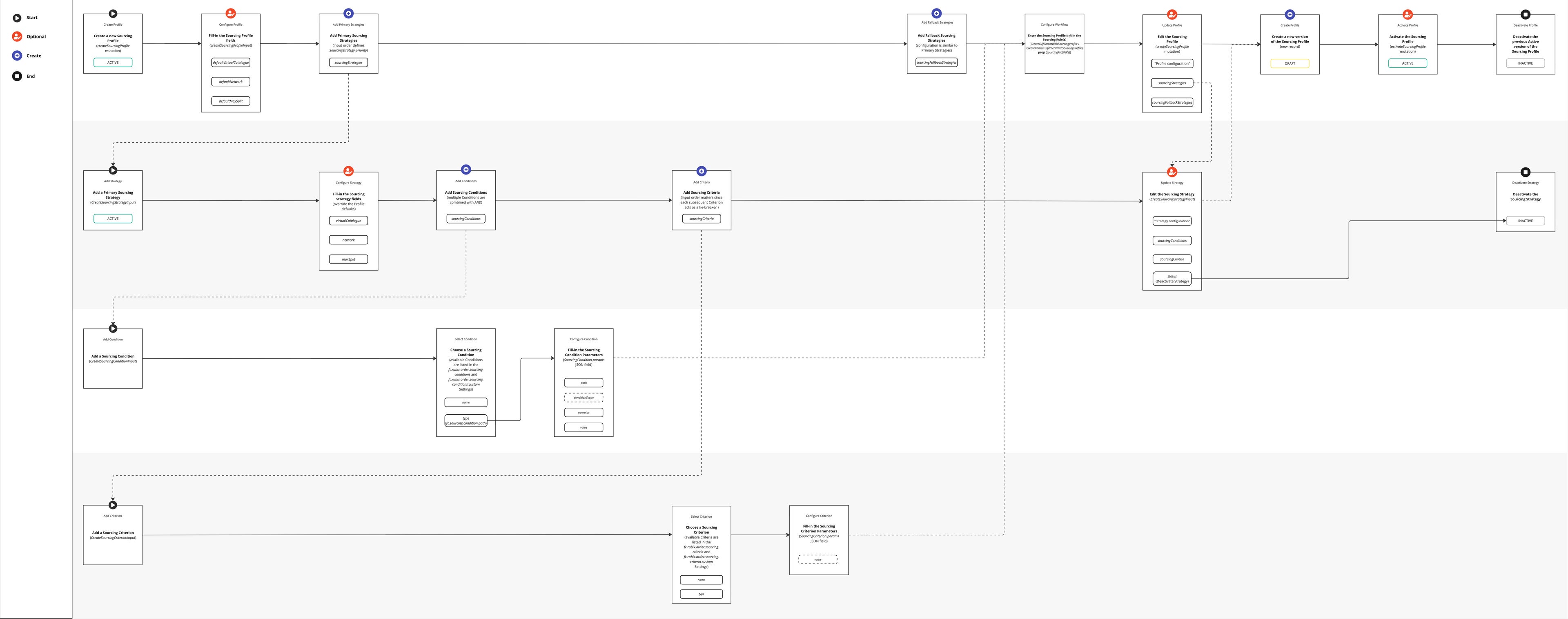
The Manage Sourcing Profiles feature allows businesses to create, update, activate, retrieve, and search centralized sourcing configurations. This capability establishes foundational baseline rules—including default networks, virtual catalogs, and maximum shipment split allocations—and enables teams to reference these profiles directly within automated order fulfillment workflows.- Create, update, activate, get, and search Sourcing Profiles
- Configure Default Network, Virtual Catalog, and Max Split values for Sourcing Strategies
- Reference Sourcing Profiles directly within Workflows
How it Works
This feature serves as the administrative control center for your fulfillment logic, allowing you to manage the entire lifecycle of a`Sourcing Profile` via the `GraphQL API`:- Profile Lifecycle Management: You can create new profiles from scratch, update existing routing records, retrieve specific profile configurations, and search through your entire inventory of sourcing profiles.
- Default Parameter Controls: Within a sourcing profile, you configure default fallback values that apply across your broader
`Sourcing Strategies`. These baseline values include:`Network`: The default group of fulfillment locations evaluated for order routing.`Virtual Catalog`: The default inventory availability catalog used to verify product counts.`Max Split`: The default maximum number of separate shipments allowed per order.
- Workflow Automation Integration: Once a sourcing profile is configured and ready, you reference the active profile directly within your orchestration
`Workflows`to guide automated real-time order routing decisions.
Who is This Feature For?
- Fulfillment Operations Managers: Responsible for defining and maintaining the rules that govern how orders are distributed across a retail network. They utilize this feature to establish baseline routing parameters and ensure consistent fulfillment behavior across different markets.
- Solutions Architects: Design the orchestration workflows that connect order management to fulfillment logic. They rely on these profiles as modular components that can be dynamically referenced within automated order-routing workflows.
- Integration Developers: Use the GraphQL API to programmatically manage the lifecycle of sourcing profiles, enabling automated updates and synchronization of routing rules across complex, multi-brand e-commerce ecosystems.
What Problems does it Solve?
- Standardized Operational Fallbacks: Configuring default networks, virtual catalogs, and split thresholds ensures the system applies consistent, pre-approved routing parameters when custom rules are absent.
- Seamless Process Automation: Referencing sourcing profiles directly within live platform workflows eliminates manual order routing steps and accelerates dispatch speeds.
- Efficient Profile Maintenance: The ability to dynamically create, update, activate, and search your entire profile library via the
`GraphQL API`reduces configuration time and simplifies multi-market integration management.
Use Cases
- Create or Update Sourcing Profile: Establishing or amending the baseline routing parameters for your fulfillment ecosystem.
- Activate Sourcing Profile: Launching a verified profile into production to begin routing active customer orders.
- Get Sourcing Profile: Retrieving the precise configuration parameters of an isolated profile for administrative review.
- Search Sourcing Profiles: Querying your system database to locate, track, and audit specific profile definitions.
