
Inventory Feature Overview
Feature
Changed on:
17 June 2026
Overview
Fluent's Global Inventory application consolidates product data, enforces visibility rules, and allocates stock across your retail network to meet customer expectations. The application identifies accurate available-to-promise levels and implements real-time inventory buffers to prevent overselling, creating a reliable and seamless shopping experience.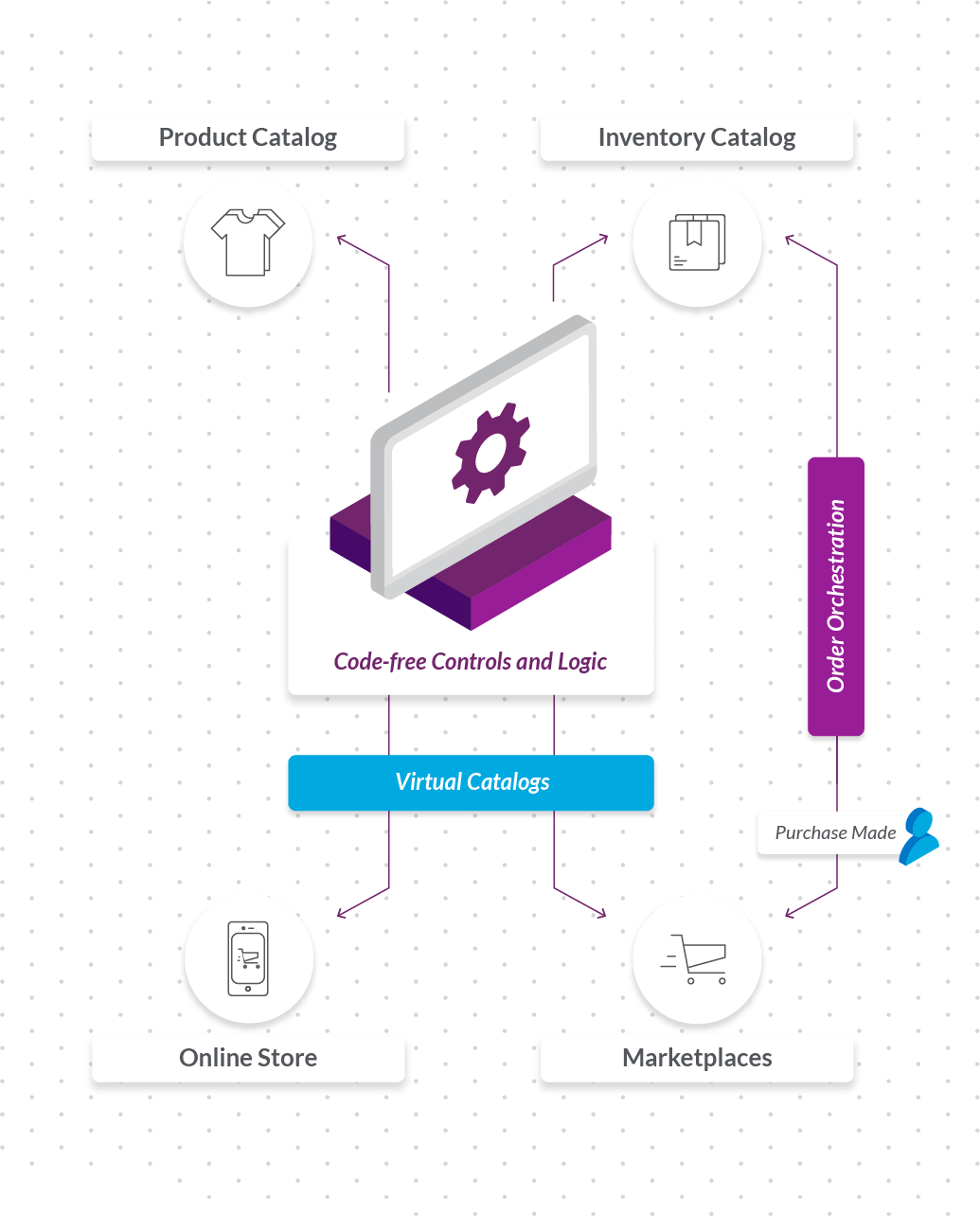
How it Works
The Global Inventory application provides a centralized engine to manage how product availability displays and distributes across your sales channels:- Multi-Source Aggregation: The application uses the
`Batch REST API`to collect and combine product and inventory data from multiple independent fulfillment and supply systems into a single view. - Inventory Visibility Rules: You define inventory visibility rules to determine exactly what products display to a customer based on specific conditions, such as the active sales channel.
- Granular Stock Allocation: The application enables you to allocate inventory dynamically across your ecosystem by product category type, location or network, sales channel, or specific product SKU.
- Real-Time Data Retrieval: The system processes and retrieves detailed information regarding inventory status and the total quantity of stock for a specific item, giving you an exact view of your Stock on Hand (SOH).
- Accurate Availability Metrics: The system calculates and identifies precise Available to Promise (ATP) inventory levels so customer-facing channels reflect true product availability.
- Protective Inventory Buffers: Built-in safety thresholds allow you to establish inventory buffers across your fulfillment networks to reduce the risk of overselling products.
Who is This Feature For?
This feature is best suited for:- Inventory Planners and Supply Chain Managers who need to aggregate stock from multiple data sources and allocate inventory across networks.
- E-Commerce Merchandising Teams responsible for setting channel-specific visibility rules, tracking accurate Stock on Hand (SOH), and maintaining safety buffers.
What Problems Does it Solve?
- Eliminated Overselling: Automated inventory buffers safeguard your stock levels during high-traffic periods, reducing order cancellations and out-of-stock complaints.
- Unified Inventory Ecosystem: Consolidating data using the
`Batch REST API`removes data silos between disparate warehouses, retail stores, and online catalogs. - Precise Channel Governance: Tailoring visibility and allocation rules ensures your online store and external marketplaces only expose inventory optimized for those specific channels.
- Optimized Customer Experiences: Providing accurate Available to Promise (ATP) metrics ensures that the products displayed on your storefront are an exact representation of what is ready for purchase.
Use Cases
Example
Managing Multi-Channel Allocation and Visibility
A retailer based in Chicago integrates inventory data from three regional distribution centers into Fluent Order Management using the`Batch REST API`. To protect stock levels for a high-demand apparel line during a seasonal promotion, the merchandising team configures an inventory visibility rule specifically for their online store channel.The team applies an inventory buffer to the product category, modifying the displayed availability. When a customer views the item online, the system checks the exact Stock on Hand (SOH) across the midwestern network, subtracts the safety buffer, and displays a secure Available to Promise (ATP) level. Once the purchase is made, order orchestration instantly updates the inventory catalog, keeping stock counts accurate across all marketplaces.